

Yellow-tail (Euproctis similis) | Species | ||||||||||||||||||||||||||||||||||||||||||||||||||||||||||||||||||||||||||||||||||||
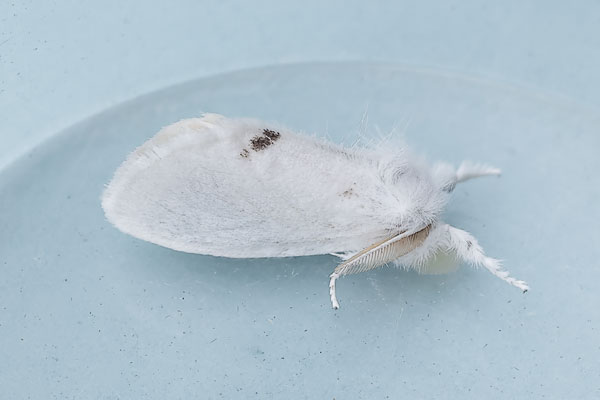 Male. Taken at Alvescot, Oxon., on July 5th 2026. (© David Hastings) (Canon R6+RF100, f/10, 1/250th, ISO1600, 100mm) 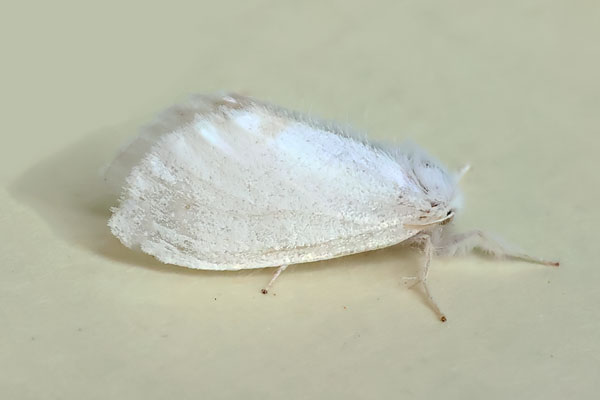 Female. Taken at Aston, Oxon., on July 13th 2022. (© David Hastings) (1/1000th sec at f/11) 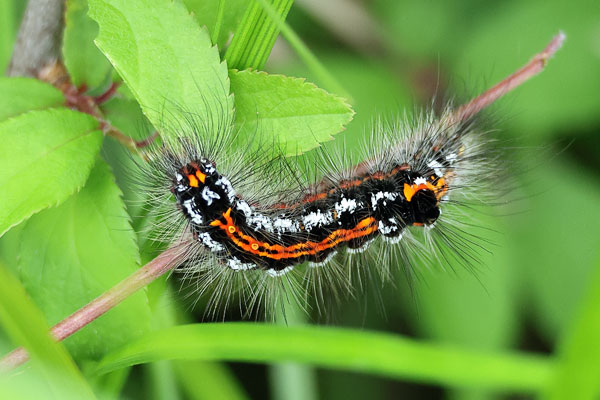 Larva. Taken at Otmoor, Oxon., on May 27th 2024. (© David Hastings) (1/800th sec at f8) DescriptionFamily: Erebidae (ABH : 72.013) Wing span: 32 - 46mm This species is similar to the Brown-tail, but is slightly slimmer with a more rounded fore-wing, which in the male has one or more blackish spots near the trailing corner. The abdomen is white with a yellow or orange tip. The female is larger, and is usually plain white. It is common in most of the southern half of Britain, except on high ground. It is absent from Scotland and all but the east of Ireland. Habitats are woodland edges, hedgerows, scrubby places and gardens. There is usually one generation in July and August. In the south there can be another generation in October. It over-winters as a small larva. Larvae sit openly on the food-plant by day. Larvae feed on many broad-leaved trees and shrubs. It is particularly frequent on hawthorns and Blackthorn, but also on Hazel, oaks, elms, sallow and Barberry. Larval hairs can cause severe skin irritation. It comes to light, and can be found resting on the food-plant during the day. Earliest UK sighting: 21st June ; Latest UK sighting: 31st July Sightings
| |||||||||||||||||||||||||||||||||||||||||||||||||||||||||||||||||||||||||||||||||||||