

Light Emerald (Campaea margaritaria) | Species | ||||||||||||||||||||||||||||||||||||||||||||||||||||||||||||||||||||||||||||||||||||||||||||||||||||||||||||||||||||||||||||||||||||||||||||||||||||||||||||
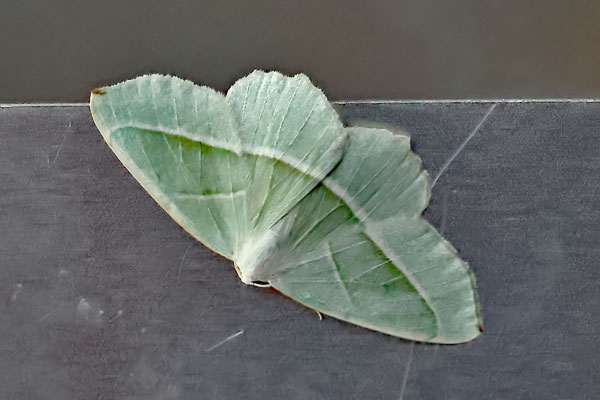 Taken at Aston, Oxon., on June 3rd 2022. (© David Hastings) (1/1000th sec at f11) DescriptionFamily: Geometridae (ABH : 70.283) Wing span: 36 - 52mm This moth is unmistakably greenish-white when fresh, but fades to whitish a few days after emergence. The hooked, reddish forewing tip, and the straight white cross-lines distinguish it from other emeralds. It is found throughout the British Isles. It is most abundant in broad-leaved woodland, but is also found in most other situations where trees and shrubs grow. It over-winters as a small larva on the foodplant. There are two generations in the south, late May to early August, and early August to early October. Larvae feed on a wide range of trees and shrubs, including oaks, Hawthorn, Blackthorn, Hazel, birches, elms, sallows, Horse-chestnut, Sweet Chestnut and Beech. Earliest UK sighting: 22nd May ; Latest UK sighting: 18th September Sightings
| |||||||||||||||||||||||||||||||||||||||||||||||||||||||||||||||||||||||||||||||||||||||||||||||||||||||||||||||||||||||||||||||||||||||||||||||||||||||||||||