
Atlantic Canary (Serinus canaria) | Species | ||||||||||||||||||||||||
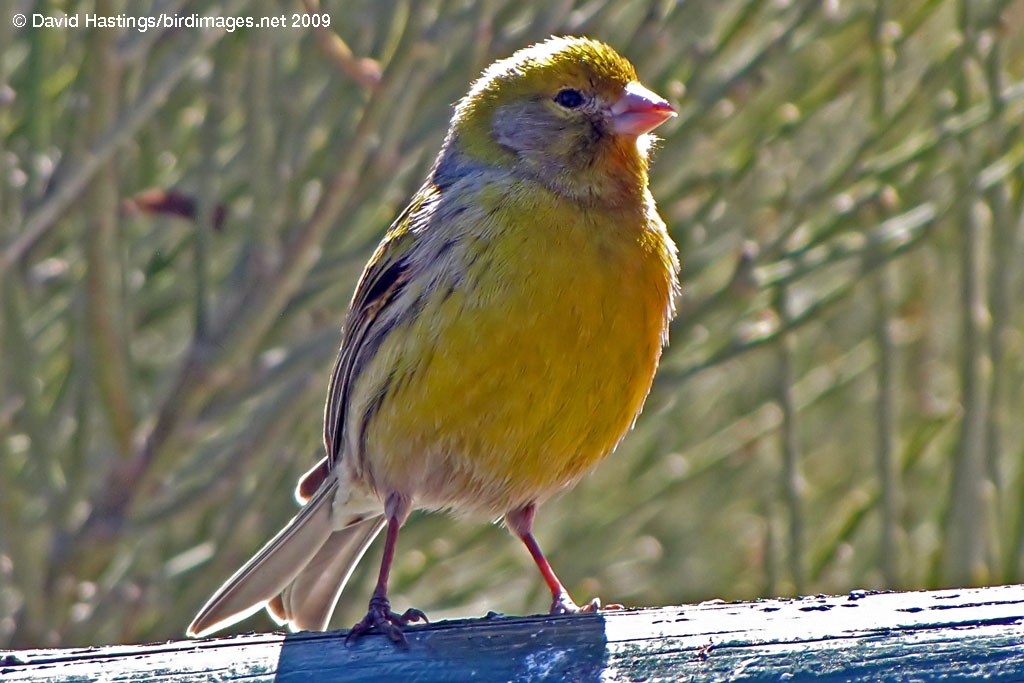 (1/320th sec at f5.7. Click image for larger version) 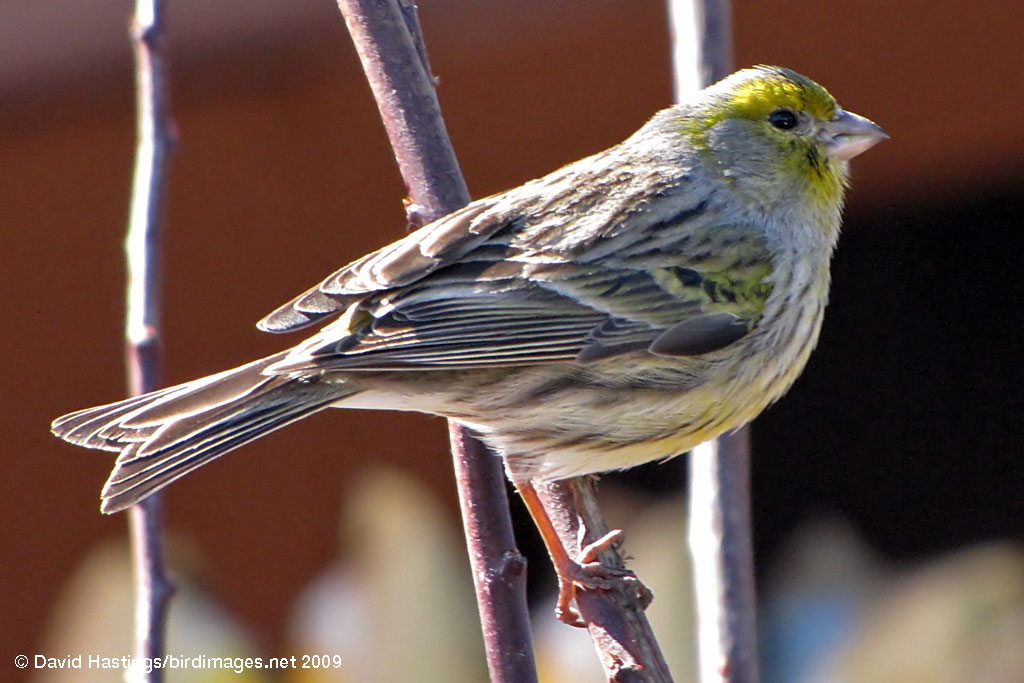 (1/250th sec at f5.7. Click image for larger version) DescriptionL: 12.5 - 13.5 cm The Atlantic Canary is the original form of the domestic Canary. Males are greenish-yellow, with streaking on the flanks and back. Females are rather duller, with less yellow. It is a Macaronesian endemic. In the Canary Islands it is common on Tenerife, La Gomera, La Palma and El Hierro, but more local on Gran Canaria, and rare on Lanzarote and Fuerteventura where it has only recently begun breeding. It is common in Madeira, Porto Santo and the Desertas Islands. In the Azores it is common on all islands. It occurs in a wide variety of habitats from pine and laurel forests to sand dunes. It is most common in semi-open areas with small trees such as orchards and copses. It frequently occurs in man-made habitats such as parks and gardens. It is a gregarious bird which often nests in groups, with each pair defending a small territory. The Canary is listed as of Least Concern by the IUCN. There are probably around 150000 pairs altogether. Sightings
| |||||||||||||||||||||||||